How a city rose from the ashes and changed fire codes for the better
On October 8th, 1871 the city of Chicago was devastated by the Great Chicago Fire of 1871, one of the most destructive fires in U.S. history. At the time, the city boasted a population of nearly 300,000, a figure that would grow significantly over the following decade. Chicago had come a long way from the small settlement it once was in the early 1800s, owing it’s reputation as a bustling metropolis to the canals and cheap transportation that allowed for booming commerce and travel.
Chicago was no stranger to fires, as the city’s infrastructure was mostly composed of wooden buildings and sidewalks. These highly flammable materials, combined with dry conditions and strong winds, created the perfect environment for a devastating fire.
How did the Great Chicago Fire of 1871 Start?
The fire, which would later destroy 2,124 acres, 17,450 buildings, cause $200 million in property damage, and kill 300 people, all began near the O’Leary family’s barn on the West Side.
The fire soon began to encroach northward, carried by steady winds, feeding off the wooden buildings and spreading rapidly through densely populated neighborhoods.
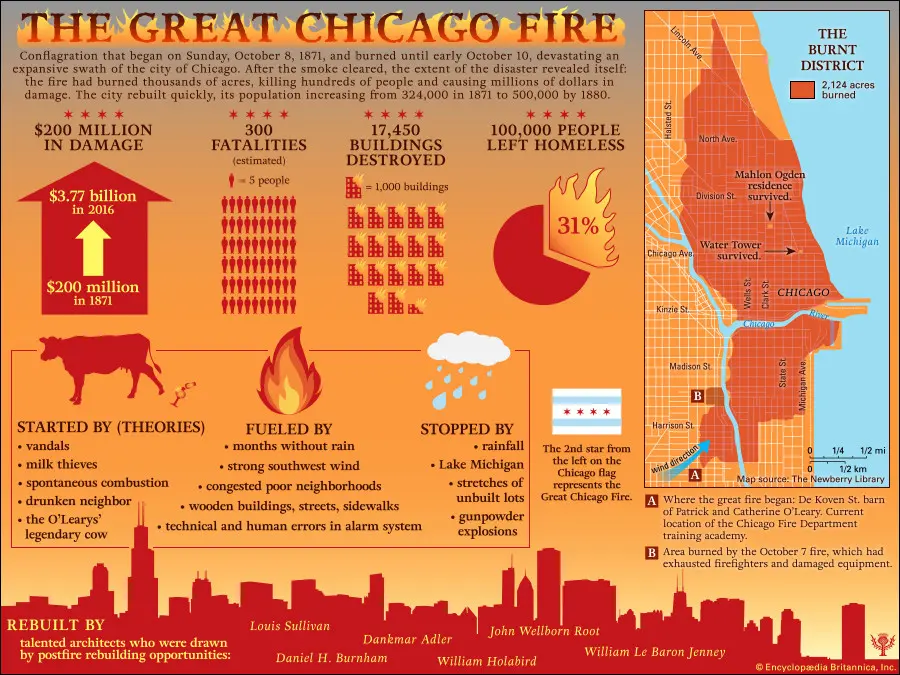
The Great Chicago Fire of 1871 would rage for two entire days, eventually extinguishing on the morning of October 10th, 1871. The fire was bested by rainfall, Lake Michigan, and the stretches of empty lots that starved the hungry flames.
How the Great Chicago Fire Changed Fire Safety Codes
Chicago rose out of the ashes from the Great Chicago Fire of 1871 with the assistance of talented architects and city leaders who pushed for stricter building regulations and improved fire safety standards.
The disaster exposed the dangers of widespread wooden construction and highlighted the importance of stronger fire prevention measures. As Chicago rebuilt, the city gradually adopted stricter building requirements, including greater use of fire-resistant materials in certain areas.
These changes helped shape Chicago’s approach to fire safety and urban development, demonstrating how lessons learned from a devastating disaster could influence future building practices.
In 1893, Chicago hosted the legendary World’s Columbian Exposition—an attraction visited by 27.5 million people. Not bad for a city that had suffered such widespread destruction just 22 years earlier.
What Caused the Great Chicago Fire of 1871?
The cause of the fire remains unknown to this day. Theories suggest milk thieves, drunken vandals, or even the O’Leary family’s cow kicking over a lantern. However, the famous story of the cow knocking over a lantern has never been substantiated.
Today, the O’Leary family’s former barn, traditionally identified as the fire’s starting point, is now home to the Chicago Fire Department’s training academy.
More than 150 years later, the Great Chicago Fire of 1871 remains a powerful reminder of the importance of fire prevention, safer building materials, and effective fire safety regulations.